Digital Platforms for Pubs & Entertainment Venues
Venue entertainment software has to work in a live room, not only in a product demo. Staff need a dependable control surface, customers need a low-friction way to join, and the shared display needs to keep the event understandable. PubPlay is FullStack Dev KZ's evidence for this kind of synchronized platform: an Android host, QR-based player web experience, public TV display, tournament state, subscriptions, and a shared backend working as one product.
Relevant when you are
- Pubs running recurring darts, pool, bingo, quiz, or custom games nights
- Entertainment venues coordinating customers across several screens
- Existing venue platforms adding player web or mobile experiences
- Product teams designing real-time event and display workflows
The host must stay in control while players see what matters
A games night includes several concurrent journeys. Staff configure the event, open registration, check names, create fixtures, enter official scores, handle the competition format, and archive the completed night. Players need a simple path into the event and clear confirmation. The room needs a visible source for the join code, next matches, latest results, and standings.
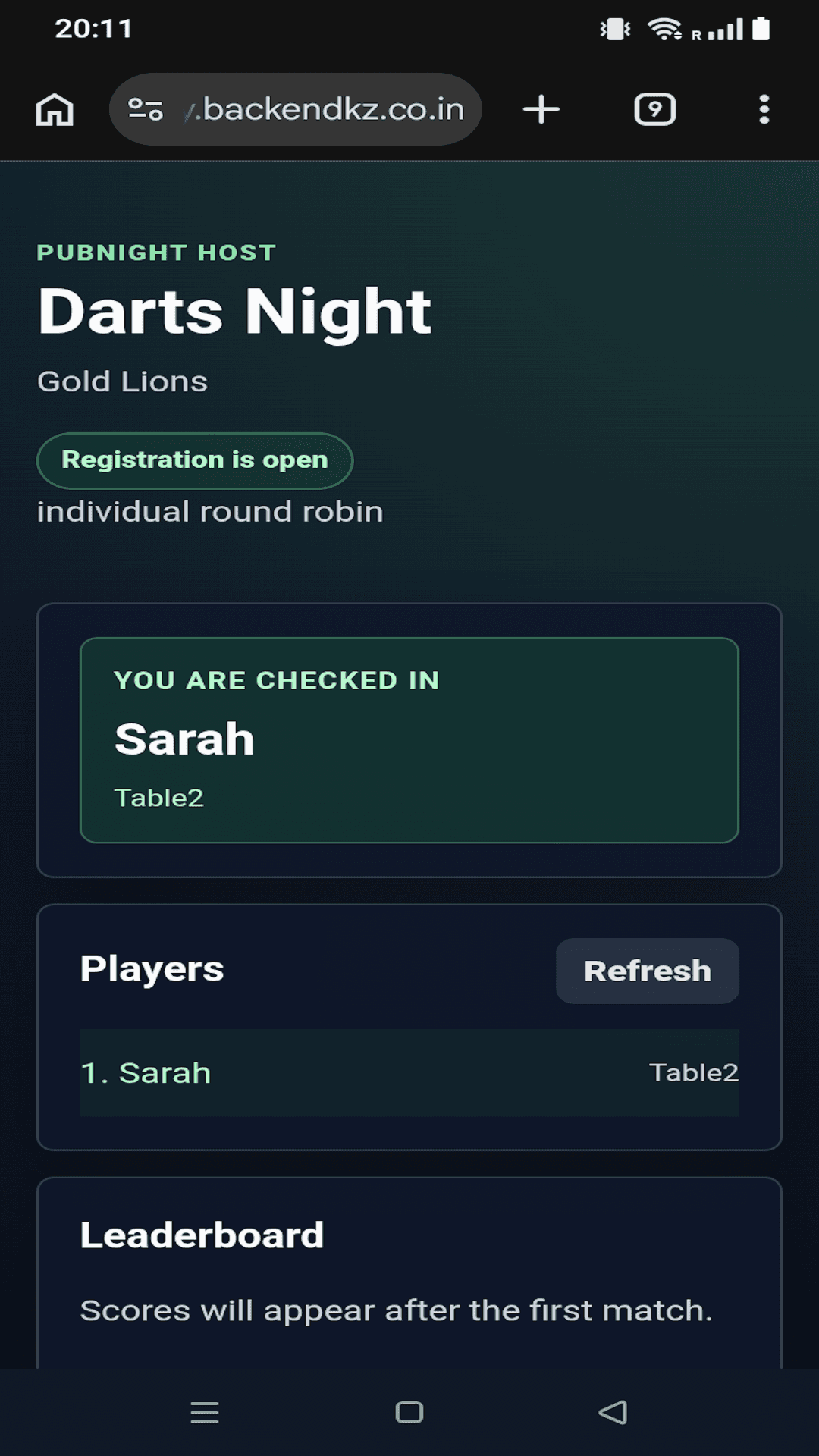
Trying to put every responsibility on one device makes the experience harder. PubPlay divides the work deliberately. The landscape Android host gives venue staff the operational workspace. Players scan a QR code and join through a responsive web page without installing an app or creating an account. A browser-based TV view communicates the state of the event to the room. The interfaces remain different because their users and distances are different, but they depend on the same event record.
- Venue setup and authenticated owner access
- QR registration without a player-app installation queue
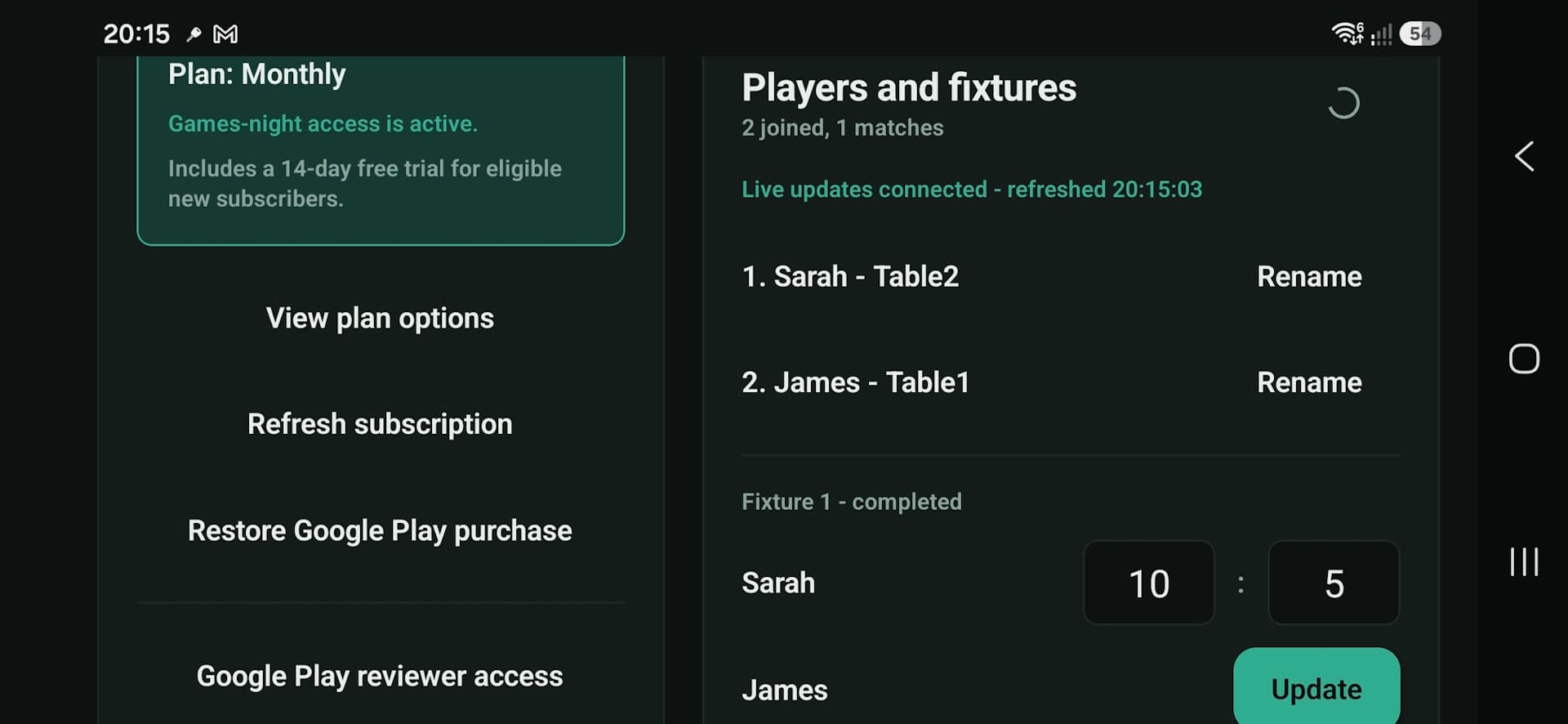
- Round-robin or knockout fixtures and official score entry
- Live standings, next fixtures, and archived event results
One platform can support tablet, phone browser, and venue display
A multi-screen venue platform is more than the same responsive page shown at three sizes. The host interface is interactive and privileged. The player interface is personal, simple, and designed for quick entry. The TV interface must be legible at distance and update without someone repeatedly refreshing it. Permissions, event state, and presentation rules need to reflect those roles.
The shared backend coordinates registration, fixtures, results, standings, and display state. That avoids separate versions of the event drifting apart. It also creates an architectural path for subscriptions, event archives, venue accounts, and future game formats without exposing sensitive implementation details to public clients. Reliability still depends on sensible connection handling and clear recovery states because a venue network is not a controlled office environment.
Digital entertainment should support the event, not distract from it
Good venue engagement software reduces explanation at the beginning and keeps the room oriented as play continues. A visible QR code shortens registration. A fixture list answers who plays next. The leaderboard gives each result context. An archive preserves the outcome after the event closes. These functions can help staff run a consistent weekly format without turning the evening into administration.
Another venue model may need different games, branded presentation, ticketing, membership, content moderation, hardware, or an existing customer database. Those requirements move the work from adopting PubPlay toward custom SaaS, web, mobile, and backend development. The industry page documents the relevant product pattern; it does not replace the official PubPlay sales path for venues interested in that product itself.
From registration to a final leaderboard
The interfaces share one event lifecycle while giving each participant only the controls and information they need.
- 01The venue creates the games night and chooses its format on the host tablet.
- 02Registration opens and a QR or join code appears for players in the room.
- 03Staff confirm participants and generate round-robin or knockout fixtures.
- 04Official scores entered by the host update player views and the TV display.
- 05The completed event becomes a read-only archive with results and standings.
One event state, three purpose-built interfaces
The product is coordinated through a shared platform rather than direct device-to-device control.
- 01Shared backend and event state
- 02Venue host tablet
- 03QR player web experience
- 04Public TV browser display
PubPlay
PubPlay demonstrates a real venue entertainment platform across an authenticated Android host, player mobile web page, live TV experience, competition formats, score entry, standings, subscriptions, and event archives.
Explore PubPlay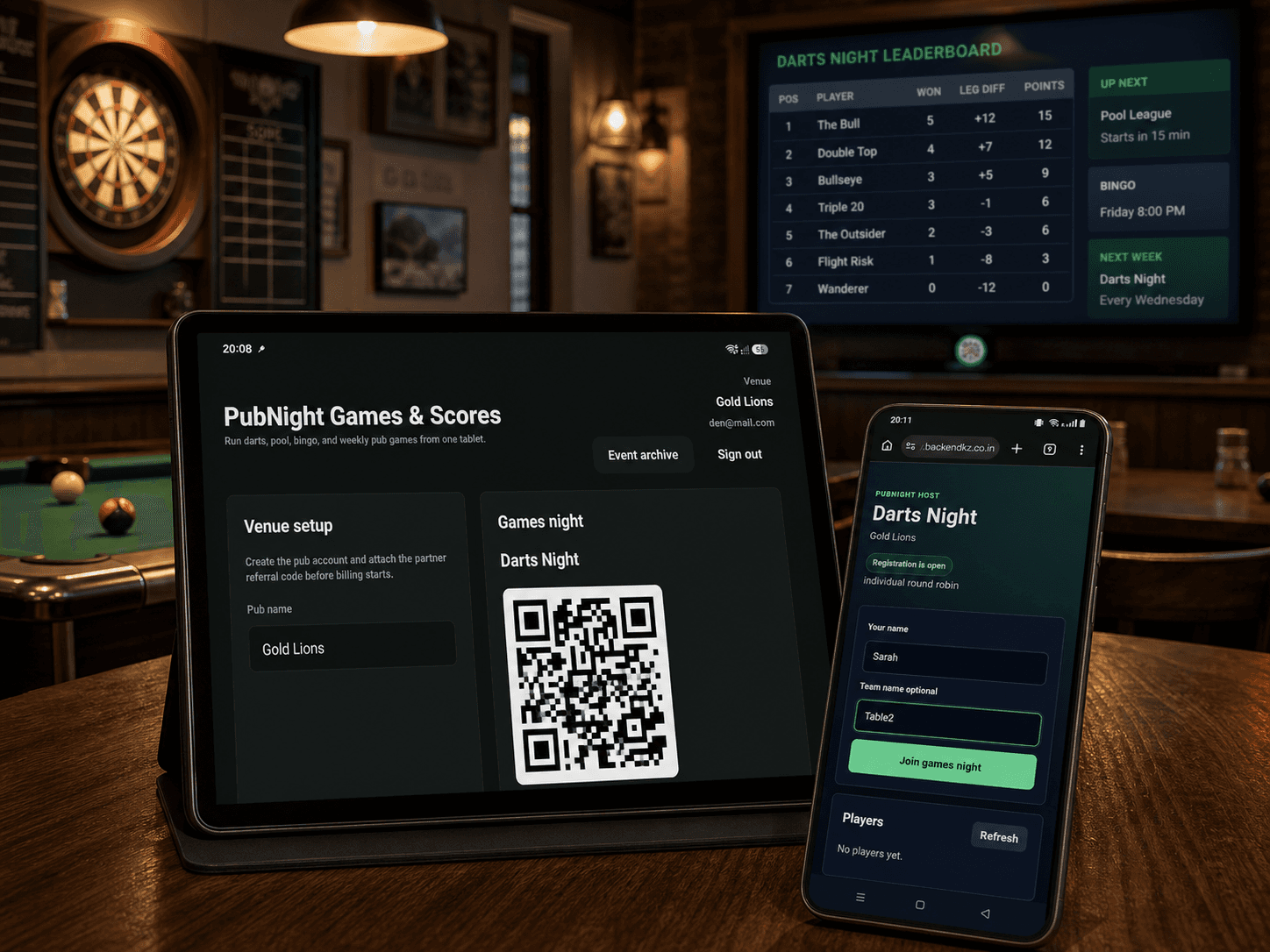
Choose the path that matches the requirement
The existing product and custom-development paths serve different needs. Neither should be hidden behind the other.
Run games nights with PubPlay
The PubPlay case study documents the actual product, its host and player journeys, TV mode, game formats, guide, and official product destination. That remains the right path for venues evaluating PubPlay itself.
Build a different venue platform
A venue group or entertainment concept with a different operating model may need custom workflows, roles, branding, integrations, or content. That work should begin with the live event journey and shared platform responsibilities.
Related software decisions
Relevant development services
Questions about this software context
Can one platform support mobile, web, and venue displays?
Yes. PubPlay demonstrates an Android host, mobile player web experience, and browser-based TV view around shared event data. Each interface should still be designed for its own user, permissions, and viewing context.
Can an existing venue system gain a mobile experience?
Potentially. The existing backend must expose suitable authentication, data, permissions, and event operations. A technical review can identify whether to integrate directly, extend the API, or introduce a separate service boundary.
Can entertainment software be customized for a particular venue model?
Yes, but scope depends on game rules, venue roles, customer entry, displays, subscriptions, branding, and integrations. Custom work should not assume PubPlay's model fits every entertainment concept.
Does a multi-screen platform require a shared backend?
Usually, when registration, scores, fixtures, and displays must stay aligned across devices. The backend provides authoritative state and access rules while each interface presents the subset it needs.
Design the venue experience as one connected platform
Share the live event, staff controls, customer entry, display requirements, existing systems, and commercial model. We can map the web, mobile, display, and backend responsibilities before development starts.