Software for Clubs & Member Organizations
A club platform serves at least two perspectives. Members need to understand what the organization offers, find an event, and manage participation. Organizers need to publish accurate information, control capacity, review bookings, handle waitlists, and know who attended. Come Together is FullStack Dev KZ's real product evidence for this architecture: public web discovery and booking, organizer administration, notifications, and an Android companion connected through one service.
Relevant when you are
- Independent clubs and recurring community event organizers
- Member organizations replacing fragmented booking administration
- Platforms combining public discovery with organizer operations
- Existing web products adding an organizer or member mobile companion
Members and organizers should not manage separate versions of the truth
Public pages need to explain the club, location, date, price, and event experience clearly enough for someone to book. Organizer tools need more detail: event configuration, capacity, booking status, waitlist position, attendance, imagery, and communication. If those sides are maintained independently, changes and cancellations create avoidable confusion.
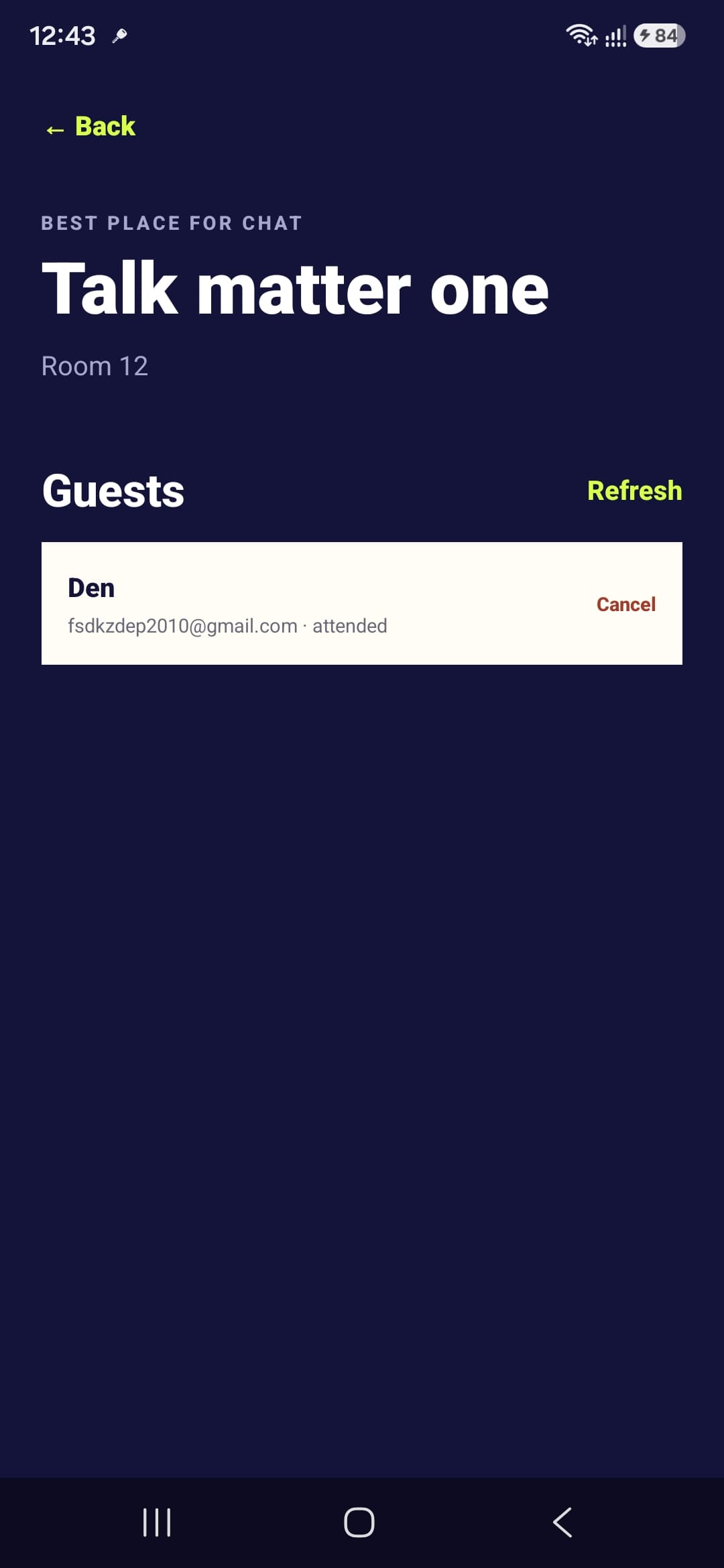
A shared club and event model lets the public experience and organizer workflow stay aligned. The organizer publishes an event once. Members see the current details and submit a booking. The platform applies capacity rules, places later bookings on an ordered waitlist, and can support promotion after a cancellation. On the day, the organizer opens the same event in the mobile companion to review guests and record attendance.
- Public club profiles and event pages
- Bookings governed by event capacity
- Ordered waitlists and cancellation handling
- Guest lists and attendance for organizers
Each side needs an interface designed for its job
Members benefit from a responsive web experience when the first action is discovery: they may arrive from search, a shared link, or a club's own promotion. Requiring an app before someone can read an event or make a first booking can add unnecessary friction. A future member app may be justified when repeat participation, profiles, notifications, or richer community journeys make ongoing installation valuable.
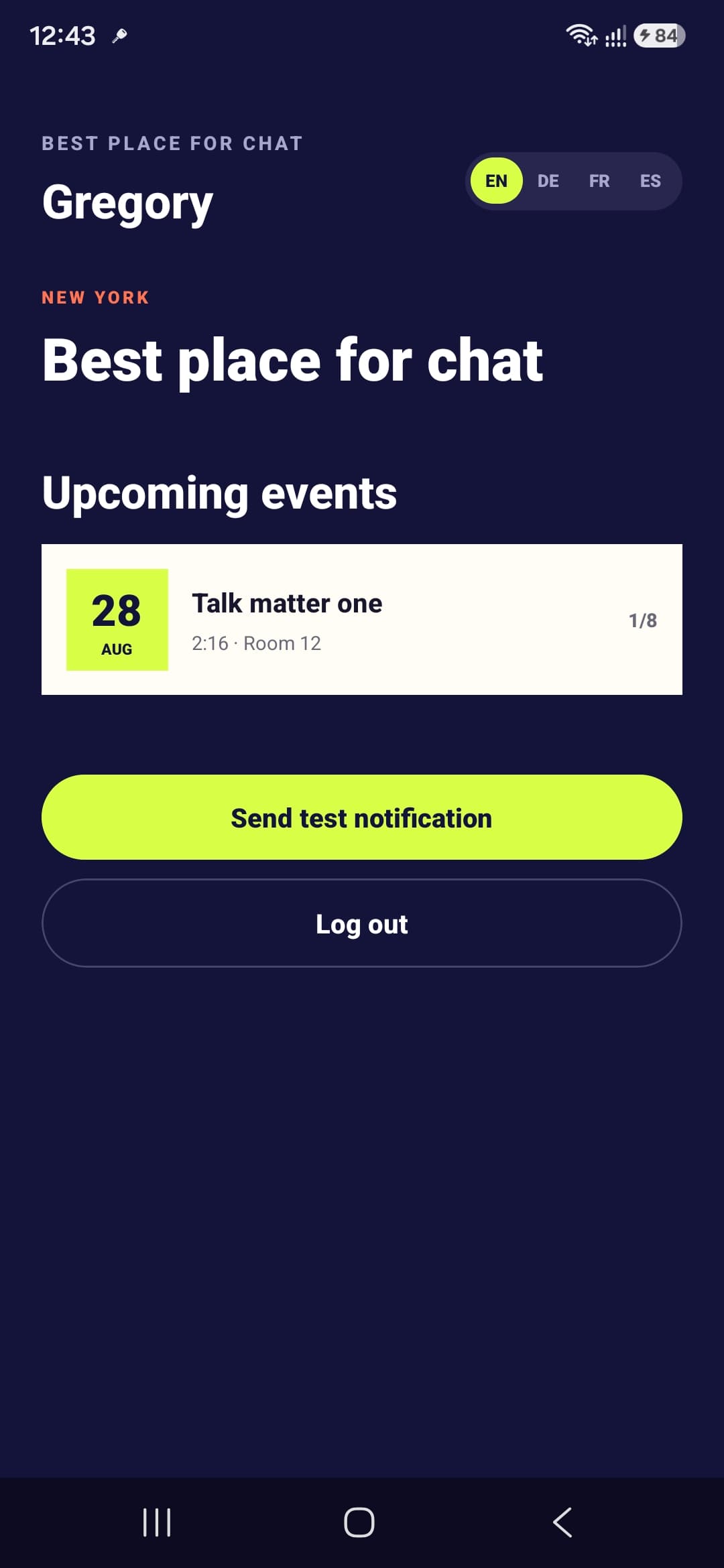
Organizers have a different pattern. They already have an account and return repeatedly to manage clubs and events. Come Together gives them a web administration experience and an Android companion for upcoming events, guest status, and attendance at the venue. This is a useful example of choosing mobile for a focused operational context rather than making every platform function available everywhere.
Capacity, attendance, and communication belong to the backend
Bookings are not only form submissions. The platform has to decide whether a place is confirmed, preserve waitlist order, handle cancellation, and keep organizer and member views consistent. Attendance adds another state after booking. Notifications for confirmation, reminders, promotion, or cancellation depend on those authoritative states and should not be implemented independently in each interface.
The same foundation can hold organization information, events, users, media, localization, time zones, currencies, and retention-oriented insight. Payment checkout is outside the current Come Together pilot, so it should not be presented as existing evidence. A custom club management platform may add payments, membership tiers, renewals, access control, or third-party integrations only after those requirements and responsibilities are properly assessed.
Roles also need deliberate boundaries. A club owner, event host, volunteer, and member may each need different visibility and authority. The platform should define who can publish information, change capacity, inspect guest data, record attendance, or contact participants. Clear permissions protect member information and keep day-of-event actions available to the people responsible for them without turning every user into a system administrator.
A complete club-event loop
The public and organizer journeys remain connected from publication through attendance instead of handing records between unrelated tools.
- 01Create the club profile with its location, time zone, currency, description, and imagery.
- 02Publish an event with its venue, local schedule, capacity, and booking information.
- 03Let members book while confirmed places and the ordered waitlist remain accurate.
- 04Use the Android organizer companion to review guests and record attendance.
- 05Use participation history to understand returning activity and plan the next event.
Public discovery and organizer operations can share one platform
The web and mobile surfaces use the same backend records while serving different moments in the event lifecycle.
- 01Shared backend and API
- 02Public club and event web experience
- 03Organizer web administration
- 04Android organizer companion
Come Together
Come Together is the local-clubs platform behind this industry evidence. It connects public club and event pages, booking, capacity, ordered waitlists, organizer workflows, attendance, notifications, localization, and an Android companion.
Explore Come Together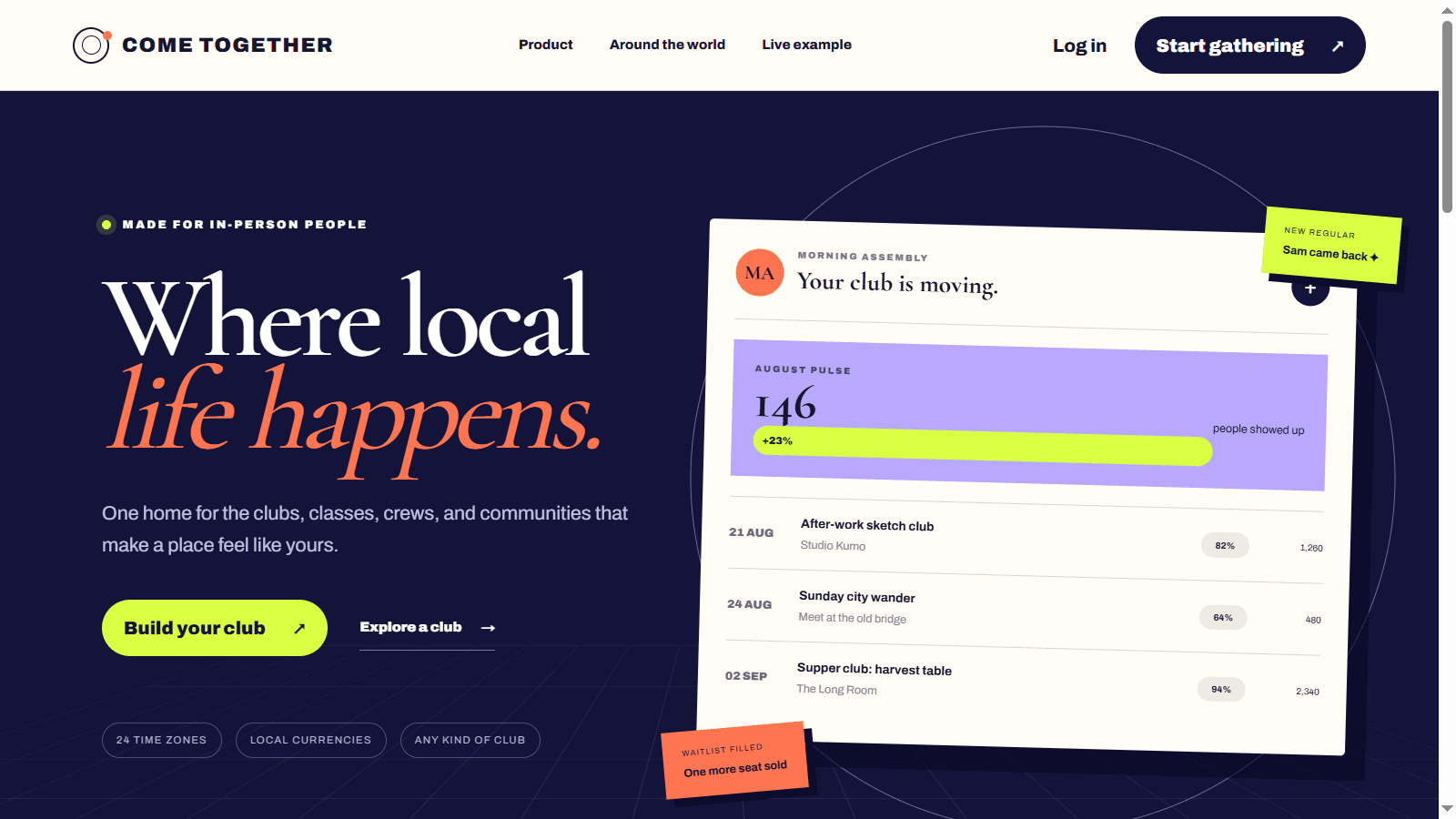
Choose the path that matches the requirement
The existing product and custom-development paths serve different needs. Neither should be hidden behind the other.
Explore the Come Together platform
The internal case study documents the product's actual public, organizer, booking, waitlist, attendance, and mobile workflows and links to its legitimate external product destination.
Build for a different membership model
Another organization may require formal memberships, renewals, chapters, permissions, documents, payments, or integrations. Those differences should shape a custom SaaS platform rather than being forced into an unrelated club product.
Related software decisions
Relevant development services
Questions about this software context
Can club software support both organizers and members?
Yes. A shared platform can provide public or member-facing discovery and booking while giving organizers authenticated tools for club information, events, capacity, guest status, and attendance.
Can members book events from a mobile app?
Yes, when a member app is part of the product. Come Together currently demonstrates responsive web booking for guests and an Android companion for organizers, which avoids requiring an installation for a first booking.
Can capacity and waitlists be managed digitally?
Yes. Come Together demonstrates confirmed capacity and an ordered waitlist, with later promotion after a cancellation. Exact reservation, expiry, and notification rules should match the organization's operating model.
Can a web platform and mobile app use the same backend?
Yes. Sharing authentication, roles, club records, events, bookings, and attendance through an API helps the interfaces remain consistent. Each client should still expose only the functions appropriate to its users.
Connect member discovery with organizer operations
Share the organization model, member journey, events, booking rules, capacity, administration, mobile context, and existing systems. We can define a web, mobile, and backend scope around the real participation lifecycle.